
 Live Radio





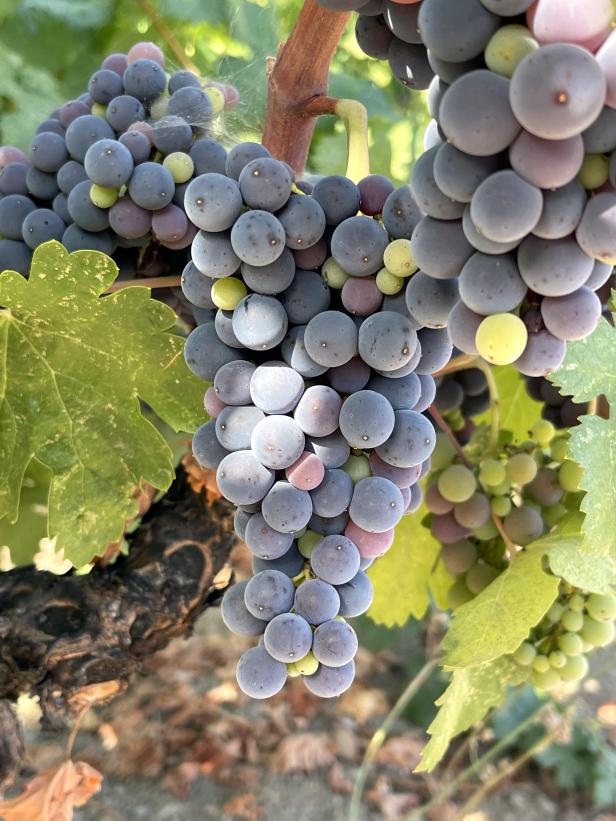 photo credit: Sarah Stierch
Carignan wine grapes in a Redwood Valley American Viticultural Area vineyard.
Lawmakers introduced a bill Monday to support wine producers and other specialty crop growers who have been hit financially by the Trump administration's foreign tariffs.
If approved, the Specialty Crop & Wine Producer Tariff Relief Act would create a new U.S. Department of Agriculture program that provides direct payments to growers of winegrapes, nuts, fruit and vegetables who can show financial losses from the tariffs.The bill would also allow the USDA to buy surplus specialty crops for use in nutrition programs such as school meals and SNAP. Funding would run through 2030.
According to lawmakers, specialty crops are often left out of federal farm relief programs, which typically focus on row crops like corn and soybeans.
The bill was introduced by Reps. Mike Thompson, D-St. Helena, Doug LaMalfa, R-Richvale, Jimmy Panetta, D-Santa Cruz, Dan Newhouse, R-Sunnyside, Wash., and Andrea Salinas, D-Tigard, Ore.
The USDA's November outlook for the agricultural trade shows that retaliatory tariffs have reduced U.S. export competitiveness for wine, fruit, nuts and other specialty crops. California farmers have been especially affected by tariffs imposed on China, Japan, South Korea and the European Union -- all major buyers of California wine, nuts and berries.
On Monday, the USDA also announced $12 billion in one-time relief payments for farmers harmed by tariffs. That aid only covers producers of corn, barley, oats, peanuts, soybeans, rice and other row crops.
LaMalfa, a fourth-generation rice farmer, helped draft the new bill in part because most farmers in his district will not qualify for the USDA's payments, he said. His district has nearly 8,000 farms, the majority of which grow specialty crops such as fruit, nuts, berries and vegetables, according to the USDA.
"The agricultural economy is suffering, and dividing farm country isn't the solution," LaMalfa said. "Row crop and specialty crop growers in my district are struggling just alike, and this bill ensures all of farm country is supported."
Winegrowing regions -- including Napa and Sonoma valleys in Thompson's district -- are also feeling the strain. Thompson said vintners are "being hit hard" by the tariffs and that local families are feeling the economic impact.
The USDA and the Wine Institute, a wine trade association, report that the latest round of tariffs has reduced export demand for California wine and raised production costs by increasing the price of imported glass and other packaging materials. Both trends are adding financial pressure on wineries and specialty crop producers across wine country.
"This bill gives them the targeted relief they need to stay competitive," Thompson said. "California's agricultural and wine community are cornerstones of our local economies. Ensuring they can weather sudden tariff hikes isn't just economic necessity -- it's a commitment to protecting the livelihoods that make our district and community special."
